Chelsea
The Captain and Ann BarbaraChelsea is the Massachusetts town where Mary Antin’s family made its next decisive settlement after Boston and Crescent Beach. Chosen first as a place where a poor immigrant could attempt to do business, it became the setting of Mary’s entry into public education, her increasingly confident performance of American citizenship, and the early enlargement of her intellectual and civic life. Chelsea therefore marks a transition from precarious arrival to lived belonging: it is the ordinary urban place in which the extraordinary promise of America becomes concrete.
Definition and Setting
Chelsea entered the family’s imagination after the Antins’ seaside business partnership ended. In Polotzk, “America” had seemed almost synonymous with Boston; after the family reached Boston, its horizon expanded to include Crescent Beach, and after that venture failed, necessity led it to “take possession” of Chelsea as another land of promise. The phrase gives the town a double character. Chelsea was not selected because it was idyllic or socially prestigious, but because it offered a workable environment for a man without capital.
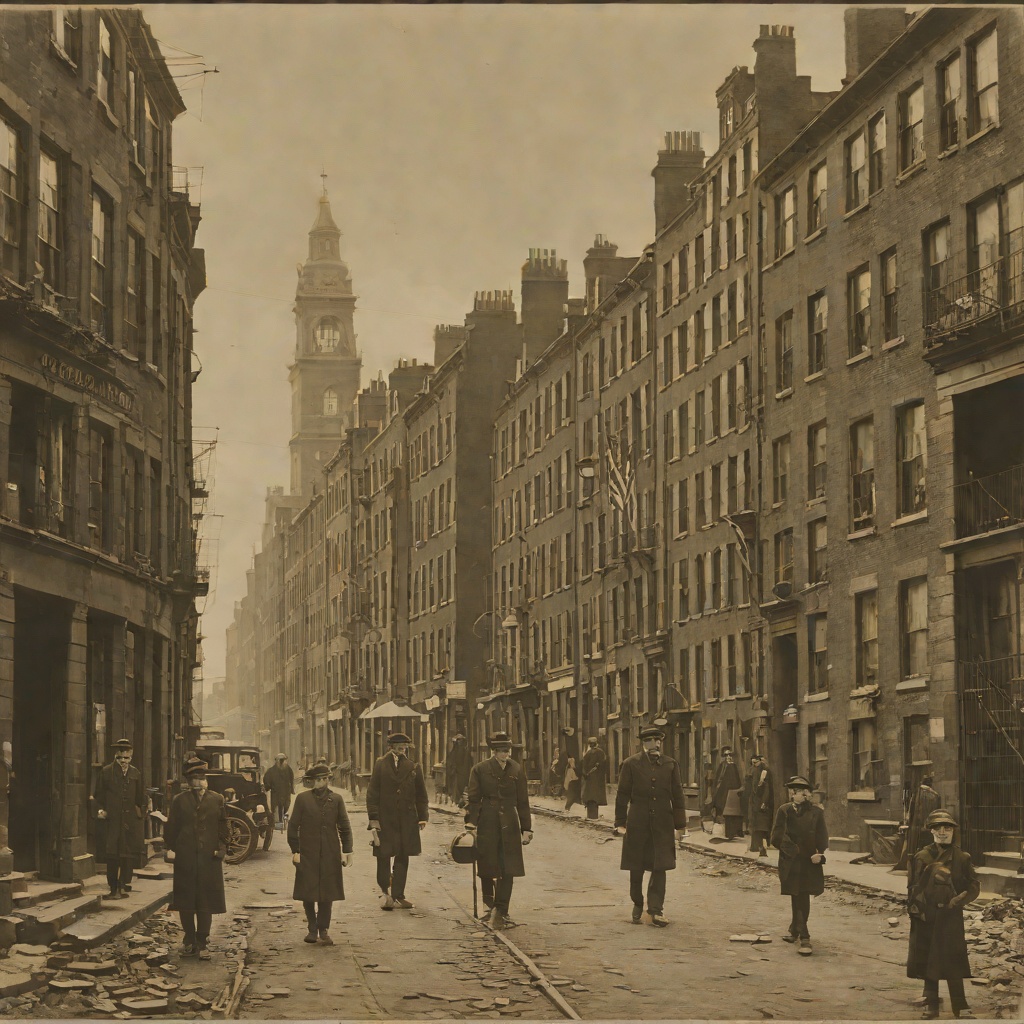
The family settled in the wrong end of town, on Arlington Street, where poor Jews, poor Negroes, and a sprinkling of poor Irish lived among one another. The side streets contained still more poor Jewish and Black residents. This was a locality shaped by poverty and immigration, yet its very lack of privilege made it suitable for the Antins’ first independent commercial effort. The father rented a tenement with a store in the basement and stocked it with modest quantities of flour, sugar, crackers, kerosene, soap, potatoes, kindling wood, and penny candy. A gilt-lettered sign announced “Strictly Cash,” although the father gave credit indiscriminately, following the customary practices of Arlington Street commerce.
The Town as a Threshold of American Life
Chelsea’s importance rests less on its material prosperity than on the way it reorganized Mary’s sense of scale and possibility. After the family’s movement from Polotzk to Boston and then to the beach, each new location pushed the horizon farther back. Chelsea became the place where this expansion was translated into institutions and routines. The town’s houses, shops, public buildings, municipal workers, and machinery all appeared to Mary as visible embodiments of the American system she had imagined from a distance.
Her civic pride was not dependent on patriotic spectacle. She needed neither a fife-and-drum corps nor a Fourth of July procession to feel stirred by Chelsea. The letter carrier and the fire engine, ordinary agents of municipal life, commanded her respect. Others considered Chelsea small, dull, and without a compelling reason for separate existence, but Mary’s judgment was opposite: the town’s very institutions made it a recognizable civic world. Its value lay in the fact that public life was present in everyday forms and available to someone who had recently come from a place where America had existed chiefly as a dream.
The Public School and Civic Belonging
The decisive Chelsea experience was Mary’s entry into the public school on a bright September morning. For most children, the first day of school is memorable; for Mary, its significance was magnified by the years she had waited, the distance she had traveled, and the ambitions she already carried. Her first attendance transformed the town from a place where the family merely lived and worked into a civic environment in which she could claim a future.
The school also became the stage on which Mary enacted and tested her American identity. During a celebration, she stood before roughly forty fellow citizens to recite her poem praising George Washington. Thin, pale, and frightened-looking, wearing a red-and-green plaid dress, she nevertheless spoke with the courage of her convictions. Her pronunciation was faulty and her declamation flat, but the performance expressed her intense belief that Washington’s country was also her country. Chelsea’s classroom thus converted patriotic feeling into public action: Mary did not simply admire America; she addressed its children as a participant in its civic culture.
That participation could also produce conflict. In the schoolyard, Mary was surrounded by Rachel, Kitty, Maggie, Sadie, Annie, and Beckie, who questioned and mocked her after discovering that she held views contrary to their religious expectations. The dispute grew into what the narrator calls a toy riot. When the bell rang, the children carried their accusations into the line, whispering that a heretic had been found among them. A teacher had to restore order, and Miss Bland later heard Mary’s account without either laughing or openly taking sides. She explained that religious arguments were best avoided on school territory, introducing Mary to the principle of separation of church and state. Chelsea’s public school therefore taught two forms of citizenship at once: the right to hold an individual conviction and the obligation to keep sectarian conflict from governing a shared civic institution.
Education, Recognition, and Public Performance
Chelsea remained the setting of Mary’s educational advancement and of the social recognition attached to it. At her graduation, the assembly hall was crowded, her parents and Frieda were present, and Miss Dillingham and other Chelsea teachers joined the honored guests. Mary’s friends were ushered onto the platform, while humbler acquaintances were scattered through the audience. The arrangement revealed the social network formed around her schooling and the extent to which her achievement had become a public event within the town.
Her graduation performance brought both triumph and humiliation. She read an original composition about a beloved cousin who had died in Russia, and the story moved a hall full of strangers. For a moment, the immigrant past that separated her from the audience became the source of her authority before it. Yet when she rose afterward and began, “I want to thank you—,” Mr. Swan, the principal, stopped her with a gesture. Mary immediately understood that she had called attention to herself when modesty required silence. The applause and recognition of the day turned into agonizing shame because her desire to acknowledge her supporters had violated the expected code of public conduct. Chelsea’s school culture thus shaped not only her speech and ambition but also her awareness of restraint, vanity, decorum, and the risks of performing the self before an audience.
Nature and Intellectual Transformation
Although Chelsea is an urban location associated with tenements, shops, schools, and civic institutions, the larger memoir places it within a movement toward an increasingly active relationship with nature. Mary’s first spiritual awakening had occurred outside Polotzk, above the bridge over the Polota, where she watched a peasant plow black furrows and heard the melody of his song. The experience enlarged the sky and earth for her, giving her a fleeting sense of “Life Universal.” Later, after migration and life by the sea, the open horizon, warm sand, storms, moonlight, and waves continued to expand her imagination.
Chelsea’s significance is partly that it provided a human and institutional setting in which this enlarged sensitivity could be educated. In the public schools, nature study existed, but an earlier teacher’s lessons about grasses and cereals had left Mary indifferent. Her transformation came later through natural history. At Mr. Emerson’s lecture in Hale House, she initially recoiled from spiders, remembering one that had once crawled down her arm from a dress. As Mr. Emerson constructed a gigantic web across the doorway and explained the spider’s struggle for existence, its enemies, traps, patient labor, instincts, and bodily fitness, Mary’s fear gave way to wonder. She began studying webs in the corners of ceilings, left especially fine ones undisturbed for weeks, watched mice at night, and fed them crusts at her threshold. The Chelsea world consequently became a threshold not only to civic membership but also to scientific attention.
That new attention led outward to the Natural History Club and its excursion to Nahant. There, club members studied marine life in tide pools, gathered starfish, limpets, and sea urchins, scrambled over cliffs, and ate lunch on the rocks. The tide erased their seaweed cushions, drowned their transparent pools, and sent foam into the crevices. The excursion joined urban education to coastal experience: Chelsea was not an enclosed endpoint but a base from which Mary and her companions could investigate the living world.
Narrative Significance
Chelsea represents the practical and emotional middle ground between displacement and belonging. Mary’s father’s letter from the voyage to America first made America a dream, while the family’s arrival translated that dream into successive places. Chelsea is where the dream acquired a store, a school, a line in a corridor, a graduation platform, a municipal landscape, and access to organized study. Its streets retain the marks of poverty and racial and ethnic mixture, but they also permit education and civic aspiration to become daily experiences.
The town’s deepest narrative function is therefore transformative rather than picturesque. It does not erase Polotzk, Russia, or the family’s precarious past; the graduation composition still carries the memory of a cousin who died far away, and Mary’s American self remains formed through comparison with what she might have been. Instead, Chelsea gives those memories a public setting in which they can be reworked. In this place, an immigrant child can enter the public school, defend individual freedom, suffer the discipline of social decorum, learn to see a spider as a living subject, and join others in studying the sea. Chelsea is the local scale at which Americanization becomes visible as education, performance, conflict, and expanding attention.